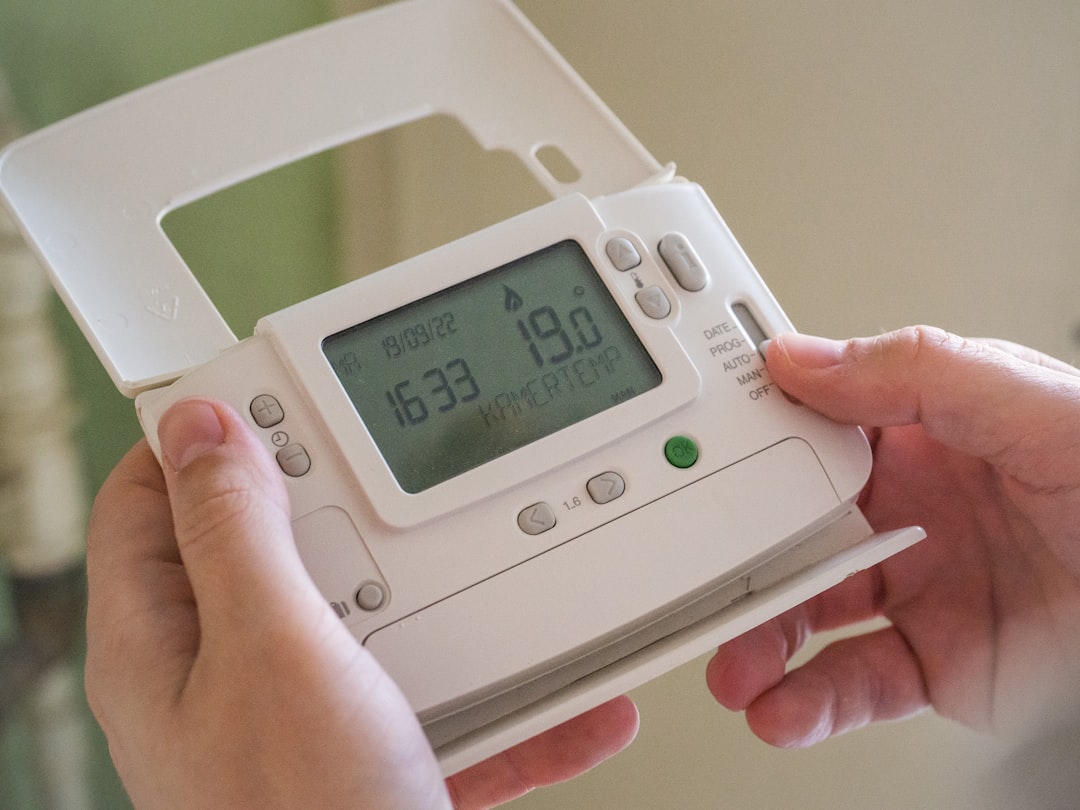
As homes get denser with electronics, faster internet, backup batteries, EV chargers, and even dedicated server closets, the line between data center cooling and residential HVAC is getting blurrier. The same engineering logic that protects racks of servers from heat spikes—precision control, redundancy, airflow discipline, and liquid heat removal—is now showing up in high-load homes that need more than a basic furnace-and-AC setup. That does not mean homeowners should install a mini data center in the basement. It does mean the best modern systems increasingly borrow from enterprise thermal management to solve real residential problems, especially when you have a home office server room, a media rack, solar batteries, or an EV charger in a tightly sealed house.
This guide breaks down which enterprise concepts are actually useful at home, which ones are overkill, and how to evaluate your options with the same rigor you would use when choosing high-performance hardware or planning a resilient home network. You will also see how vendors are translating commercial technology into home-friendly products, where the economics make sense, and what to ask an installer before you spend a dollar on upgrades.
Why data center cooling matters more to homeowners than you might think
Homes are becoming heat-dense environments
Traditional residential HVAC was designed around people, sunlight, insulation, and maybe a refrigerator or two. Today’s homes can include game consoles, NAS arrays, 24/7 workstations, hybrid routers, battery systems, and EV charging equipment that all add steady internal loads. That changes the cooling problem from simple comfort control to thermal management. When equipment runs all day, small inefficiencies stack up and the system has to handle both sensible heat and humidity control without constant cycling.
Enterprise facilities are built around exactly this kind of continuous load. In a server environment, the issue is not just keeping air cool; it is removing heat in a predictable, measurable way without hotspots. Homeowners with dedicated tech spaces can benefit from that same thinking. A basement office with a rack, an arcade cabinet, an AV stack, and a mini-split is not a data center, but it does create a localized heat island. That is why the smartest residential retrofits now look more like designing for user behavior than simply installing a bigger AC.
Precision matters when the load is concentrated
Most people think “cooling” means lowering a thermostat number. In high-load rooms, that is not enough. Precision cooling means maintaining a narrow temperature band, managing airflow exactly where it is needed, and preventing short-cycling or overshoot. In practical terms, that could mean a dedicated mini-split for a server room, a ducted return designed to pull warm air away from equipment, or smart vent zoning to keep one room from overheating while the rest of the house stays comfortable.
The commercial world has been doing this for years through precision air conditioning units, fan walls, and room-level controls. A home adaptation does not need the scale of a colocation facility, but it can use the same principles: separate loads, isolate heat sources, and monitor conditions continuously. Homeowners who ignore those principles often end up overcooling the rest of the house while a small equipment room still runs hot. That is a waste of energy and a sign the system is not actually solving the problem.
Why enterprise engineering is entering the consumer market
Manufacturers increasingly serve both data center and home markets because the physics are the same, even if the scale is different. Companies like Modine publicly describe offerings that span IT cooling solutions, precision air conditioning, and liquid cooling for high-density computing. That matters for consumers because the same brands, controls, coils, and heat exchangers can be adapted into more compact, quieter, and more efficient systems for homes. The result is a trickle-down of enterprise know-how into products that are more resilient and more controllable than old-school comfort-only equipment.
This mirrors what happens in other categories: innovations start in demanding environments, get cost-optimized, then move downstream. In HVAC, the “enterprise to consumer” path is especially relevant because homes are getting more like small facilities. A large garage with EV charging, a workshop with compressors, and a basement with network gear all impose heat loads that old HVAC assumptions never accounted for.
Precision AC at home: what it is and when it makes sense
What precision AC actually does
Precision AC is built to keep temperature and humidity within tight tolerances. Unlike a standard residential system that turns on and off with wider swings, precision cooling emphasizes stable airflow, consistent dehumidification, and continuous operation at lower noise and vibration levels. In data centers, that stability protects servers from thermal stress. In homes, it can protect expensive electronics, wine storage, home studios, or rooms where you cannot tolerate temperature swings.
For residential use, this usually comes in the form of a high-quality ductless mini-split, a dedicated ducted zone, or a specialty cooling package for a server closet. The goal is not to “feel cold.” The goal is to keep a room predictable. If you have a 24/7 home office or a compact server room, that predictability can be worth more than another ton of whole-house capacity.
Best-fit residential scenarios
Precision-style cooling makes the most sense when a single room has a disproportionate load. Examples include a home server room, an AV closet with streaming gear, a workshop with electronics testing, or a finished basement with a rack-mounted backup system. In these cases, you want a dedicated solution that does not depend on the rest of the house opening doors or pushing air around unpredictably. That is why homeowners often pair smart controls with zoning hardware and local sensors rather than trying to force the central HVAC system to handle it all.
If the room is small and loads are moderate, a properly sized mini-split can be enough. If the load is high and continuous, you may need more robust airflow design, condensate management, and redundancy. That is the same logic used in commercial spaces: when uptime matters, you do not rely on a single weak link. Homeowners can apply that mindset without buying enterprise gear wholesale.
Where precision AC becomes a waste
Not every home needs precision HVAC. A typical family room with a gaming console and a laptop does not justify commercial-style systems. Overengineering often creates higher upfront cost, more maintenance complexity, and less flexibility when room use changes. The better approach is to start with load estimation and heat-source mapping before buying equipment.
For many households, the right answer is better insulation, improved air sealing, a variable-speed system, and targeted vent balancing—not precision AC hardware. If you are unsure where to start, it helps to think like an operator reviewing process efficiency. In residential terms, that means looking at the metrics that matter: room temperature spread, runtime, humidity, and energy draw. If those numbers are already good, you may not need a specialized upgrade.
Liquid cooling concepts: what can and cannot translate to a house
Why liquid cooling exists in data centers
Liquid cooling became popular in high-density computing because water and coolant move heat much more efficiently than air alone. As server chips got hotter and rack density increased, air cooling reached practical limits. Liquid systems can remove heat closer to the source, reducing the burden on room air handlers and improving overall efficiency. That is why the industry has invested heavily in direct-to-chip systems, rear-door heat exchangers, and hybrid liquid/air designs.
For homeowners, this matters because the same basic physics can help with concentrated thermal loads. You might not need coolant running through a house like a lab, but you may benefit from liquid-based heat transfer in specific devices or equipment enclosures. The most realistic residential use cases are battery thermal management, high-end server racks, specialty home studios, and utility-room heat exchangers.
Residential liquid cooling: where it is feasible
True whole-home residential liquid cooling is rare and usually unnecessary. The feasible version is localized. Think of a sealed cabinet for networking equipment with liquid-assisted heat exchange, a battery system that uses its own thermal management loop, or a water-source heat pump that leverages stable loop temperatures. Some homeowners with advanced server rooms even use liquid-cooled CPUs and then exhaust the remaining heat through dedicated ventilation, though that is a niche use case.
The practical takeaway is that liquid cooling is not about replacing HVAC entirely. It is about moving heat away from the source before it enters the living space. In a high-load basement, that can reduce noise, improve comfort, and lower peak demand on the main system. If you are comparing options, evaluate complexity carefully. A system with pumps, seals, fluid maintenance, and leak risk should only be considered if the heat load or uptime requirement truly justifies it.
What homeowners should watch for
Liquid systems introduce failure modes that air systems do not. You need to think about leak detection, freeze protection, pump reliability, service access, and compatibility with existing mechanical systems. That is why professional installation is not optional. A reputable contractor should be able to explain head pressure, loop design, condensate management, and service intervals in plain English. If they cannot, they probably are not the right installer for a hybrid cooling project.
For additional perspective on enterprise-grade controls and risk planning, the logic is similar to reviewing technical controls and failure containment in complex systems. The home version is simpler, but the mindset is the same: isolate, monitor, and design for graceful failure instead of hoping for the best.
High-load homes: EV chargers, server rooms, and the new cooling math
EV charging changes the thermal picture
An EV charger does not usually dump heat into the house the way an oven does, but it often lives in garages, utility rooms, or adjacent spaces that also house mechanical equipment. Add a Level 2 charger, a battery backup, a water heater, and possibly a workshop refrigerator, and the space can become a steady heat source. That heat may not be dramatic at any single moment, but it accumulates over long charging cycles and can raise ambient temperatures enough to affect nearby systems.
This is why residential cooling planning now overlaps with electrical planning. If you are already upgrading a panel for EV charging, it is worth thinking about ventilation, zoning, and equipment placement at the same time. You would not place a sensitive IT rack next to a heat source in a commercial setting. The same rule applies at home. A little layout discipline can save you from overbuying cooling capacity later.
Home server rooms require constant attention
Home server room HVAC is one of the clearest residential adaptations of enterprise cooling. If you keep network storage, home automation controllers, a router stack, and backup systems running 24/7, then you have effectively created a small data environment. Even modest gear can generate a persistent load, and most homes were not built to manage that heat continuously. Door gaps, return placement, and restricted airflow become much more important than most homeowners realize.
In many homes, the simplest fix is a dedicated cooling zone with smart monitoring. In more demanding cases, a small ducted system or a mini-split with remote sensors makes more sense. The key is to align equipment with actual runtime and occupancy patterns. If the room is unoccupied most of the day but gear is always on, the HVAC strategy should prioritize thermal stability over comfort staging.
How to estimate whether you need more than standard HVAC
Start by identifying every continuous heat source in the area: servers, battery inverters, dehumidifiers, chargers, compressors, and even lighting. Then estimate how many watts of waste heat they produce, because watts convert almost directly to heat. Once you know the load, you can determine whether a normal residential zone has enough capacity or whether you need a dedicated solution. This process is similar to how operators model capacity in other industries: you are not guessing, you are sizing based on load.
In practice, many homeowners discover the issue is not total cooling tonnage but air delivery. A room may have enough nominal capacity on paper but still overheat because supply and return paths are poor. That is where enterprise-inspired design helps. Good cooling is not just about horsepower; it is about heat pickup, transport, and rejection. For more on choosing the right platform for your setup, see our guide on high-risk, high-reward system ideas and how to decide when a larger investment actually pays off.
Enterprise features that are most likely to appear in residential products
Variable-speed compressors and smarter controls
One of the biggest enterprise-to-consumer shifts is better modulation. Variable-speed compressors, ECM blowers, and smart controllers let residential systems maintain tighter conditions without wasteful on/off cycling. That brings consumer products closer to the stability once reserved for commercial and data center environments. The homeowner benefit is lower noise, more even temperatures, and potentially better efficiency during long runtime periods.
Smart controls also matter because they make advanced systems usable. Enterprise equipment has always depended on monitoring; residential adoption depends on making those controls accessible through apps, sensors, and automation. If your house already uses occupancy-based routines or smart vents, adding temperature and humidity sensors can dramatically improve performance. For related comfort ideas, our piece on smart vents and personalized comfort shows how room-level automation can work without making the home feel overly technical.
Heat exchangers, packaged units, and compact fan walls
Many enterprise innovations reach homes in the form of smaller packaged components rather than full systems. Compact heat exchangers, advanced coils, and quieter fans can improve efficiency even when the homeowner never sees the underlying technology. Some manufacturers also adapt fan-wall concepts and modular approaches to better airflow control in denser installations. That can be useful for basements, utility rooms, and garages where airflow patterns are constrained.
This is especially relevant for retrofits. Not every home can support new ductwork or a wholesale rebuild, so manufacturers are making equipment that fits tighter spaces and works with existing structures. The consumer version of a data center design is rarely a literal copy; it is a miniaturized interpretation. If you are dealing with a cluttered mechanical room, even small improvements in coil design and fan performance can yield noticeable gains.
Monitoring, diagnostics, and serviceability
Enterprise cooling systems are built to be observed. They log temperatures, pressures, alarms, and runtime so operators can catch issues early. That same philosophy is starting to appear in residential systems with connected diagnostics and predictive maintenance. For homeowners, this can mean fewer surprise breakdowns and more precise service calls, because the technician arrives with data rather than guesses.
That is important for commercial-ready buyers who want reliability and less downtime. In the home environment, good diagnostics can prevent the classic cycle of “it still feels kind of off” calls. The more your equipment tells you about itself, the easier it becomes to manage both comfort and costs. This is the same logic behind better documentation and testing in other technical fields, such as the guidance in fact-checking AI outputs: better inputs lead to better decisions.
What to ask before buying or upgrading residential cooling for high-load spaces
Does the system handle the load continuously?
Many residential HVAC systems are sized for intermittent occupancy, not 24/7 loads. If the space contains servers, networking gear, or battery systems, ask whether the unit can maintain temperature through continuous operation in peak weather. A system that performs well during a few hot afternoons may still fail during a multi-day heat wave if it cycles too aggressively. Ask for runtime expectations, not just tonnage.
You should also ask whether the system is comfortable operating at low load without short-cycling. That matters in shoulder seasons when the rest of the home may not need much cooling, but the equipment room still does. The best answer is often zoning, not brute force. The right contractor will be able to explain why.
How is humidity managed?
High-load rooms can overheat, but they can also become sticky and uncomfortable if latent removal is poor. Precision-style cooling is valuable partly because it manages humidity consistently. In humid climates, a system that only cools the air without addressing moisture may leave electronics and occupants in a less stable environment. That is particularly relevant for basements, where moisture control can become the hidden problem.
When talking to installers, ask how they will measure relative humidity, where the sensors will go, and whether the equipment can dehumidify without overcooling. If they treat humidity as an afterthought, keep looking. A good thermal plan is a comfort plan and a durability plan at the same time.
What happens if one component fails?
Enterprise systems are valued partly because they fail gracefully. Home systems should be judged the same way when the load is critical. If a pump dies, a sensor fails, or a condenser blocks up, what happens to the room? Will the gear survive until service arrives, or is there a backup fan, alarm, or secondary path? These are not paranoid questions; they are the practical questions that separate a robust system from an expensive mistake.
If you want to think like a procurement team evaluating complex equipment, our guide on ROI modeling and scenario analysis is a useful framework. The same logic works for HVAC: compare upfront cost, energy use, reliability, and service risk before you buy.
Comparison table: residential adaptations of enterprise cooling concepts
| Enterprise concept | Residential adaptation | Best use case | Pros | Watchouts |
|---|---|---|---|---|
| Precision AC | Ductless mini-split or dedicated zone | Server room, AV closet, home office | Tight temperature control, quiet operation | Can be oversized or under-sized if load is miscalculated |
| Liquid cooling | Localized liquid loop or battery thermal management | Battery rooms, specialty racks, high-load utility spaces | Moves heat efficiently, lowers room load | Complexity, leaks, pump maintenance |
| Fan walls | High-airflow ducting with better return placement | Basement conversions, equipment rooms | Improves heat pickup and distribution | Requires thoughtful layout and commissioning |
| Building management systems | Smart thermostats, sensors, and zoning | Whole-house comfort with hot spots | Visibility, automation, remote monitoring | Integration issues across brands |
| Predictive maintenance | Connected diagnostics and service alerts | Homes with critical equipment loads | Fewer surprise failures, better service planning | Subscription costs and data privacy concerns |
| Hybrid cooling | Central HVAC plus dedicated equipment cooling | Homes with EV chargers and server rooms | Efficient load separation | Higher design complexity |
Cost, efficiency, and the ROI question
When enterprise-inspired cooling saves money
The biggest savings usually come from avoiding oversizing and targeting the right room with the right solution. A dedicated cooling zone for a server room can be far cheaper to run than forcing the whole-house system to work harder. Better airflow design can also reduce runtime, improve comfort, and extend equipment life. In other words, the savings are not just energy savings; they are maintenance savings and equipment-protection savings too.
If your home is already operating at the edge because of electronics, EV charging, or a finished basement, you may find that a smarter local solution lowers the burden on the central system. That is especially true in homes with variable occupancy. And if your priority is reliability, a more targeted system can be worth it even if the payback period is longer than a simple thermostat upgrade.
When it does not make financial sense
Enterprise-inspired cooling can be overkill for average households. If you do not have a meaningful heat load or a room that must stay within tight limits, the installation cost may never justify itself. That is especially true if the project requires structural work, new electrical circuits, or frequent maintenance. In those cases, conventional HVAC optimization, attic insulation, and air sealing usually deliver better returns.
Homeowners should also be cautious about marketing language. “Precision” does not always mean better for the home; sometimes it just means more expensive. Ask for actual performance data, energy-use projections, and service requirements. A transparent contractor should be able to explain why a certain solution is appropriate rather than simply selling a premium label.
How to compare options like an engineer
Compare systems across four axes: load coverage, control quality, maintenance burden, and failure impact. If one option has excellent precision but high service complexity, it may be right for a critical server closet and wrong for a casual finished basement. If another option is cheaper but less stable, it may work fine for general comfort but not for electronics. This is a practical way to separate marketing from engineering.
For broader perspective on choosing between systems and performance tiers, our article on how to choose between economy, premium economy, and business offers a helpful analogy: not every upgrade is worth it, but the right upgrade at the right time can be transformative. The same is true in HVAC.
What the future looks like: the next 5 years of home cooling innovation
More modular, more zoned, more intelligent
The residential market is moving toward smaller, modular systems that can be deployed where the load actually exists. That means more room-level cooling, more sensor-driven zoning, and more equipment that can be mixed and matched instead of replaced all at once. As homes become more digital, the HVAC system will increasingly act like an infrastructure layer rather than just a comfort appliance.
We can also expect smarter fault detection, better app-based visibility, and stronger integration with home energy systems. Homes with solar, batteries, and EV chargers will want cooling strategies that coordinate with energy availability and demand peaks. That is where enterprise-style control logic will matter most. The future is not one huge AC unit; it is a coordinated thermal ecosystem.
Consumer-friendly liquid and hybrid solutions
It is unlikely that most homes will use full-scale liquid cooling, but hybrid systems will become more common. Think of liquid at the device level, air at the room level, and smarter building controls at the home level. That layered approach is already standard in complex facilities, and it will make sense in homes with mixed loads. The more electronics a house contains, the more likely it is to need layered thermal design.
This is also where brands with enterprise heritage have a leg up. They understand heat transfer, redundancy, controls, and lifecycle service. If they can package that expertise into simpler consumer products, homeowners will benefit from more durable systems and fewer surprises. For a useful parallel on translating technical capability into local trust, see how creators approach enterprise moves in local growth strategies.
How homeowners can prepare now
The best preparation is to think in terms of loads, zones, and serviceability. Map the rooms that create heat, decide where continuous cooling matters most, and keep electrical and mechanical upgrades aligned. If you are renovating, it may be worth running dedicated circuits, improving return paths, or adding space for future equipment. These choices are much easier during a remodel than after the room is finished.
Also, document your equipment and maintenance schedule. High-load homes age better when someone understands what is installed, how it is supposed to behave, and who services it. That same discipline shows up in every well-run technical environment. Whether you are maintaining servers or a house, the winning strategy is the same: know your system, measure it, and stay ahead of failures.
FAQ
Is precision AC the same as a mini-split?
Not exactly. A mini-split is a type of residential cooling system, while precision AC is a performance category focused on tighter temperature and humidity control. Some mini-splits can function like precision cooling for a small server room or equipment closet if they are sized and controlled correctly. The difference is in the objective: comfort-first versus stability-first.
Can I use liquid cooling in my home server room?
Yes, but usually only in a limited, targeted way. Liquid cooling makes sense for specialized equipment or very dense loads, not as a whole-room replacement for HVAC. Most homeowners are better served by a dedicated cooling zone and good airflow unless the equipment density is unusually high.
Do EV chargers require extra cooling?
Not usually the charger itself, but the surrounding space may need better ventilation or thermal planning. Garages and utility rooms can become warmer when charging is frequent and other equipment is nearby. If the area also contains batteries, inverters, or appliances, cooling and airflow become more important.
What is the biggest mistake homeowners make with high-load cooling?
The most common mistake is treating a hot equipment room like a normal living room. That leads to undersized airflow, poor return placement, and systems that cycle without solving the actual problem. A room with continuous loads needs a load-based design, not just a bigger thermostat setting.
How do I know if my house is ready for enterprise-inspired cooling?
Start by counting continuous heat sources and identifying any room that must stay stable 24/7. If you have servers, battery systems, EV charging, or a dense home office setup, you may benefit from dedicated cooling. A good HVAC contractor should be able to assess the loads and recommend whether zoning, a mini-split, or a more specialized system is appropriate.
Bottom line: adopt the principles, not the data center scale
Enterprise cooling innovations are not turning homes into data centers, but they are giving homeowners better tools for managing concentrated heat, sensitive electronics, and continuous loads. The most useful ideas are precision control, zoned airflow, stronger diagnostics, and localized heat removal. Those concepts can make a real difference in homes with server rooms, EV chargers, battery storage, or finished basements packed with electronics.
If you approach the problem the right way, you do not need industrial-scale equipment to get industrial-grade thinking. You just need the right system for the load, installed by someone who understands both comfort and thermal management. For more on connected home comfort and room-by-room automation, revisit smart vents and personalized comfort, and for broader planning, our discussion of ROI modeling and scenario analysis can help you decide when a premium HVAC upgrade is actually worth it.
Related Reading
- The Definitive Laptop Checklist for Animation Students - A practical guide to performance, heat, and reliability in demanding workflows.
- Is Mesh Overkill? - Learn when to upgrade your home network for always-on gear.
- Smart Locks + Smart Vents - Room-level comfort control ideas that pair well with zoning.
- Technical Controls to Insulate Organizations - A useful framework for thinking about redundancy and failure containment.
- Metrics That Matter - A measurement-first mindset that translates well to HVAC decisions.