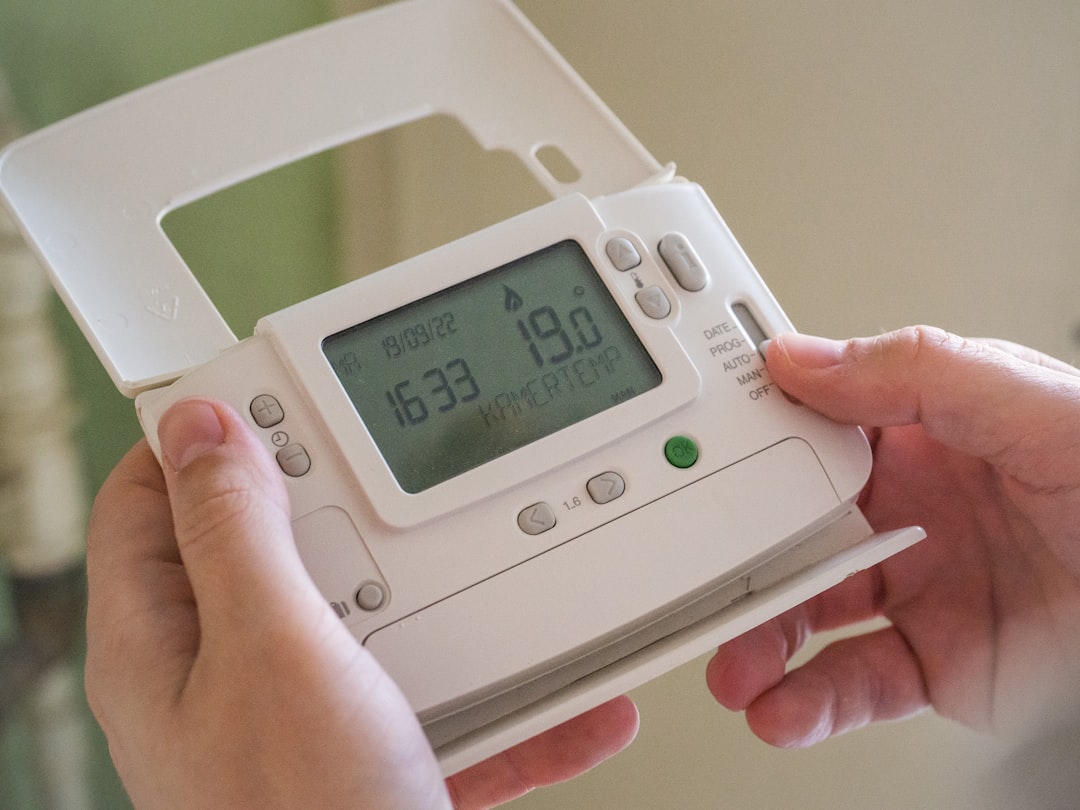
As energy prices fluctuate and homeowners demand smarter, greener comfort, 2026 is shaping up to be a breakthrough year for residential heating. This guide explores the technologies that are changing how homes are heated — from smart thermostats and heat-pump breakthroughs to grid-aware systems, advanced sensors, and installation tools that shrink risk and boost performance. If you want concrete upgrade paths, realistic ROI estimates, and a checklist to scope work with contractors, you’ll find it here.
Along the way we reference practical resources and adjacent technology trends (networking, IoT, cybersecurity) that matter when you connect your heating system. For example, improving your home's wireless backbone matters: learn why a mesh network is often the first upgrade to enable reliable smart heating controls. And because many smart heating features depend on secure IoT, see frameworks for how IoT integration is evolving for safety and reliability.
1. The Smart Thermostat Revolution: Beyond Basic Scheduling
Adaptive control and machine learning
Today’s smart thermostats do far more than schedule setpoints. They continuously model your home’s thermal response and use on-device machine learning to pre-heat or pre-cool for occupancy patterns, weather, and energy prices. That trend reflects a larger movement where AI tools optimize physical systems — you can see similar conversions in web and product workflows in our analysis of how AI tools transform conversion. For homeowners, this means a thermostat that reduces runtime without sacrificing comfort: empirical case studies show 8–12% heating energy reductions after six months of adaptive learning.
Room-by-room zoning with smart sensors
Zoning used to require ductwork changes and expensive dampers. Now, wireless room sensors combined with smart thermostats and variable-speed equipment enable practical, incremental zoning. Install a base thermostat and add sensors to bedrooms and living areas to capture real indoor conditions and run the house at different setpoints without fighting for airflow. When planning, factor in wireless reliability — consult guidance on improving mobile hub workflows and local networking to ensure low-latency data from sensors to controller; practical tips are covered in our piece on mobile hub workflow improvements.
Integration with renewables and tariffs
Smart thermostats that accept dynamic price signals can shift heating loads to low-cost hours or match rooftop solar output. This capability is increasingly common as vendors offer direct tariff APIs or partner with aggregators. Expect to see more subscription-style services for continuous optimization — a trend analogous to what the automotive world has done with subscription features, as discussed in Tesla’s subscription shift. Before signing up, verify what data is shared and the cancellation terms.
2. Heat Pumps and New Heating Modes
Cold-climate air-source heat pumps (ccASHPs)
Modern ccASHPs reach higher efficiencies at sub-freezing temperatures and now form the backbone of many electrification plans. Compared with legacy electric resistance, properly sized heat pumps can cut heating energy by 40–60% in moderate climates and provide strong emissions benefits where grid electricity is low-carbon. When choosing a unit, prioritize real COP curves over seasonal ratings: ask installers for performance data at 5°F, 20°F, and 47°F so you can model winter performance accurately.
Hybrid systems: heat pumps + gas for redundancy
Hybrid or dual-fuel systems pair a heat pump with a high-efficiency gas furnace to maintain comfort during extreme cold without oversizing the heat pump. This reduces upfront capital while preserving gas backup in regions where electrification incentives are smaller. Use lifecycle cost modeling (include maintenance, fuel price scenarios, and incentive timing) to pick the right hybrid balance.
Ground-source heat pumps and innovation in ground loops
Ground-source (geothermal) systems continue to increase in viability as drilling and loop-field installation techniques become more modular and cost-effective. New approaches to loop design and hybrid ground-air solutions reduce excavation costs. If land area is limited, ask about vertical closed loops and borehole sharing arrangements; contractors who can explain thermal conductivity testing and loop sizing are worth a premium.
3. Distributed Heating: Micro-CHP, Hydrogen-ready Systems & Local Thermal Storage
Micro combined heat and power (micro-CHP)
Micro-CHP units produce heat and electricity onsite, improving overall fuel utilization. While early systems were niche, improved control electronics and compact reciprocating engines or fuel cells are expanding use in colder regions. The best candidates are larger homes with steady baseload heat demand; run the numbers for your household before committing.
Hydrogen-ready burners and future fuels
Manufacturers are certifying boilers and burners to be hydrogen-ready as gas networks explore decarbonization pathways. If you have a newer condensing boiler, look for 'H2-ready' labels and supplier roadmaps — this future-proofs infrastructure without requiring immediate equipment replacement when the fuel supply evolves.
Thermal storage: when to add a buffer tank
Thermal storage buffers let heat pumps run at efficient steady states, store off-peak heat, and provide short-term resilience. For homes with low thermal mass or intermittent renewable generation, a properly sized buffer tank reduces on-off cycling and extends equipment life. Engage an installer to run a simple simulation comparing runtime reductions with and without storage.
4. Sensors, Controls & AI Orchestration
Multivariate sensing for comfort and IAQ
Modern sensor suites include temperature, relative humidity, CO2, VOCs, and occupancy detection. These feed control logic that manages not only heating but also ventilation and air quality. Integrating IAQ sensing prevents scenarios where efficient heating increases pollutant concentrations. If you’re upgrading, pick sensors with known calibration specs and an easy replacement strategy.
Edge AI vs cloud AI: pros and cons
Edge AI performs inference locally (low latency, privacy-friendly) while cloud AI enables heavy model updates and fleet learning. A hybrid approach is common: local inference for occupancy-based control and cloud aggregation for periodic model improvements. For security-minded homeowners, see best practices in blocking unwanted bots and access as discussed in our technical guide to blocking AI bots — many principles transfer to securing IoT endpoints.
Autonomous agents and self-tuning systems
Autonomous control agents can adjust setpoints, staging, and equipment sequencing to optimize for efficiency or comfort. Embedding autonomous logic into control platforms follows patterns discussed for developer tools; see how autonomous agents are being integrated into developer IDEs in recent tooling. For HVAC, demand-side management agents should include safe-fail states and allow homeowner override.
5. Grid Interaction, Demand Response, and Virtual Power Plants
Demand response: how your heating can earn you money
Utilities and aggregators now pay for controllable heating loads that can be shifted or curtailed during peak demand. Heat pumps and smart water heaters are ideal candidates. Participation requires certified controls and secure telemetry. Expect programs to offer simple opt-in thermostats or APIs for aggregators, but always check data privacy terms before enrolling.
Virtual Power Plants (VPPs) and aggregated flexibility
VPPs coordinate thousands of residential loads to provide grid services. For homeowners, that means potential revenue streams or lower tariffs in exchange for flexible control windows. Review program terms for payment structure and control rights. Learn how subscription and pricing models are shaping other industries in our discussion of subscription services, which offers useful parallels for energy economics.
Interoperability and standards
Open protocols (Matter, OpenADR, IEEE 2030.5) are expanding support across vendors. When you buy new equipment, prioritize compatibility and certified integrations to avoid vendor lock-in. If you’re managing multiple smart devices, understanding ecosystem tradeoffs is valuable — see commentary on the broader Apple ecosystem evolution to anticipate vendor roadmaps and platform lock-in risks.
6. Installation, Commissioning & Aftercare Technologies
Digital twin commissioning and AR-guided installs
Contractors increasingly use augmented reality (AR) and digital-twin workflows to validate design before physical changes. This reduces rework and ensures commissioning runs to spec. If a contractor offers AR-based commissioning, ask to see a completed report and the as-built digital model — it’s a sign of rigorous practice.
Automated diagnostic tools and remote service
Tools that capture compressor curves, refrigerant charge verification, and airflow metrics cut diagnostic time. Remote diagnostics and telemaintenance can resolve many issues without a truck roll. Learn what to expect in service-level proposals and insist on documented baselines for pre/post-install performance.
Uptime monitoring and maintenance alerts
Continuous health monitoring provides alerts for filters, blower performance, and refrigerant anomalies. This mirrors site-uptime monitoring in IT — the same operational mindset applies to HVAC: consistent telemetry matters. For an IT-style approach to uptime, see best practices in our discussion of scaling and monitoring.
7. Cybersecurity, Privacy, and Data Ownership
Secure device lifecycle
Security starts at manufacturing: secure boot, signed firmware, and certificate-based authentication. Ask vendors for security whitepapers and patching policies. Many homes remain vulnerable because devices are added without this due diligence; prioritize products with clear supply-chain and update practices.
Network segmentation and best practices
Place HVAC devices on a segmented VLAN or guest network, limit external access, and use strong WPA3 authentication where possible. If you upgraded your Wi‑Fi for smart heating, revisit router and mesh settings to enable segmentation — guidance on mesh networks can be found in our home Wi‑Fi upgrade article.
Contracts, subscriptions and vendor lock-in
Some optimization services run on subscription models that retain user data. Before enrolling, evaluate data retention, export rights, and what happens if the service ceases. The shift toward subscription features in other industries, like automotive, offers a preview of how energy services might evolve; see parallels discussed in Tesla’s subscription shift and investment perspectives in investment strategy analysis.
8. Financing, Incentives & Cost-Benefit Analysis
Available incentives in 2026
Federal, state, and utility incentives still drive many heat pump upgrades and insulation projects. Check local programs and stack incentives to reduce upfront cost. An installer should help you pull permits and secure rebates; if not, find a contractor with a proven track record of navigating incentive paperwork.
Simple payback vs lifecycle costing
Simple payback (capital cost / annual savings) is easy but incomplete. Use lifecycle costing that includes maintenance, replacement cycles, and probable fuel price scenarios. For households considering subscription services or remote optimization, include recurring fees and projected savings in the model.
How lenders and investors view home energy upgrades
Lenders increasingly accept energy upgrade valuations as part of mortgage underwriting. For developers and large portfolios, monitoring and reporting frameworks for energy savings resemble enterprise practices; read about resource allocation and alternative containers in technical contexts in resource allocation strategies to appreciate parallels for capital planning.
9. Practical Roadmap: How to Plan Your Heating Technology Upgrade
Step 1 — Audit and baseline
Begin with a home energy audit and thermal model. Measure envelope performance, identify drafts, and establish baseline energy use. Request a detailed combustion and electrical safety check if you have legacy fossil systems. This baseline will anchor ROI calculations and help justify insulation or air-sealing measures before equipment upgrades.
Step 2 — Prioritize measures
Prioritize low-cost, high-impact measures first: insulation, air sealing, programmable thermostats, and pipe insulation for hydronic systems. If you’re constrained by budget, prioritize controls and sensors that unlock flexible operation and demand-response participation.
Step 3 — Choose equipment and a qualified contractor
Vet contractors for certifications, warranty practices, and telemetry capabilities. Ask for references and examples of past jobs with before/after energy data. If they use digital-twin commissioning or remote monitoring, ask to see the reporting format. Leadership in execution matters; insights on building sustainable teams and practices are discussed in our guide to leadership lessons for sustainable teams, which translates to trades teams as well.
Comparison Table: Key Technologies and When to Use Them
| Technology | Best for | Typical Uplift vs baseline | Upfront cost | Notes |
|---|---|---|---|---|
| Cold-climate Air-Source Heat Pump | Most existing homes in cold/mixed climates | 40–60% energy savings | Moderate | Look for performance curves at low temps |
| Ground-source Heat Pump | Homes with space/land; long-term ownership | 50–70% energy savings | High | Stable COP year-round; higher install cost |
| Smart Thermostat + Sensors | All homes with central heating | 8–15% energy savings | Low | Must pair with reliable network |
| Thermal Storage (Buffer Tank) | Homes with low thermal mass or intermittent renewables | Reduces cycling; extends equipment life | Low–Moderate | Best when paired with heat pump + demand management |
| Micro-CHP | Larger homes with steady heat & electric demand | Improved fuel utilization; variable | High | Consider local maintenance availability |
Pro Tip: Before any smart upgrade, secure a reliable mesh Wi‑Fi backbone and segment your HVAC devices on a separate VLAN — it will prevent many connectivity and security headaches before they start.
Case Study: Suburban Retrofit — 2,000 ft² Home
Baseline
Wood-frame, original furnace (AFUE 80%), 2,000 ft², annual heating 10,500 kWh equivalent. Homeowner faced high winter bills and poor upstairs comfort.
Intervention
Installed ccASHP sized for 85% load fraction, added smart thermostat and three wireless room sensors, upgraded attic insulation, and added a 40-gallon buffer tank. Contractor used AR-guided commissioning and provided remote monitoring subscription for 12 months.
Results after 12 months
Measured heating energy down 52%, annual cost down 48% (including subscription fee), and improved upstairs comfort. Remote diagnostics prevented a refrigerant undercharge issue in month two, avoiding a costly in-person fix.
Tech Adoption Risks and How to Mitigate Them
Risk: Vendor lock-in and poor interoperability
Mitigation: Prioritize open standards and ask for data export options. Insist on equipment that supports local control where possible and verify APIs if you plan on integrating with home automation hubs.
Risk: Cybersecurity vulnerabilities
Mitigation: Use strong segmentation, change default passwords, and choose vendors with clear patching policies. For teams managing many homes, adopt secure lifecycle practices similar to software ops — parallels are explored in our piece on resource allocation strategies.
Risk: Poor financial outcomes from mis-specified equipment
Mitigation: Demand written load calculations, COP curves, and commissioning reports. Consider third-party performance verification or short-term performance guarantees.
Frequently Asked Questions (FAQ)
Q1: Will a smart thermostat save me money if I already have a programmable thermostat?
A1: Yes — smart thermostats use adaptive learning and sensors to reduce runtime beyond static schedules. Savings depend on your current behavior and home thermal characteristics; incremental savings of 8–15% are typical when paired with sensors and proper commissioning.
Q2: Are heat pumps noisy in winter?
A2: Modern heat pumps operate quietly compared with older models. Cold-climate heat pumps are engineered for low-temperature performance and often include inverter-driven compressors that run at variable speed, reducing noise. Proper siting and mounting further minimize audible impact.
Q3: How do I know if my home is a good candidate for geothermal?
A3: Geothermal is best when you plan to stay long-term, have enough land (or permitting for vertical bores), and want the highest year-round efficiency. Ask for a site feasibility study that includes soil thermal conductivity testing and loop-field layout.
Q4: Will participation in demand-response programs compromise my comfort?
A4: Most programs allow homeowner override or limit control windows and provide compensation. Opt into pilot programs with explicit comfort protections and short curtailment windows to evaluate real-world impact.
Q5: How important is Wi‑Fi quality for smart heating?
A5: Very important. Smart heating depends on reliable low-latency connections for sensors and controls. A home mesh Wi‑Fi upgrade is often the first step; read more in our guide on optimizing home networks for smart devices here.
Next Steps: Actionable Checklist for Homeowners
- Schedule a home energy audit and request thermal modeling.
- Upgrade insulation and air sealing before major equipment replacement when possible.
- Install a robust mesh Wi‑Fi and segment HVAC devices.
- Choose heat pump technology aligned to your climate and occupancy; collect COP curves for winter temps.
- Prioritize vendors who provide commissioning reports, remote monitoring, and clear security policies.
- Compare lifecycle costs, include subscription fees, and check incentives.
Adopting innovative heating technologies is not just about new gadgets — it’s a systems play that combines equipment, controls, communications, and secure operations. Integrations with home ecosystems, business models, and the grid are evolving fast: anticipate subscription-style optimization services, tighter grid-device coordination, and stronger privacy requirements. If you want to deepen your knowledge about adjacent tech trends shaping the smart home, look at how autonomous agents and developer tooling are evolving (autonomous agents), or how investment thinking is shaping technology decisions in 2026 (investment strategies for tech decision makers).
Finally, when selecting a contractor, ask for documentation of their digital commissioning workflow, uptime monitoring approach, and examples where remote diagnostics prevented failures — the same operational rigor that drives reliable online services is now available for home heating. To understand how uptime practices translate across disciplines, compare with IT monitoring frameworks in our write-up on site uptime monitoring.
Related Reading
- Cotton and Homes: What Agricultural Trends Can Reveal About Real Estate Values - How macro trends in agriculture can be useful context when assessing property investment.
- The Ultimate Guide to Powering Your Home Office: Deals on Essential Gear - Practical tips on powering devices and choosing UPS solutions for home setups.
- Navigating Cotton Futures in 2026: Understanding Market Trends for Small Farmers - Market trend analysis that complements regional economic planning.
- The Next Wave of Creative Experience Design: AI in Music - A look at AI-driven personalization that helps explain trends in adaptive systems.
- Visual Diversity in Branding: Lessons from Beryl Cook - Design lessons relevant to UX considerations in consumer technology.