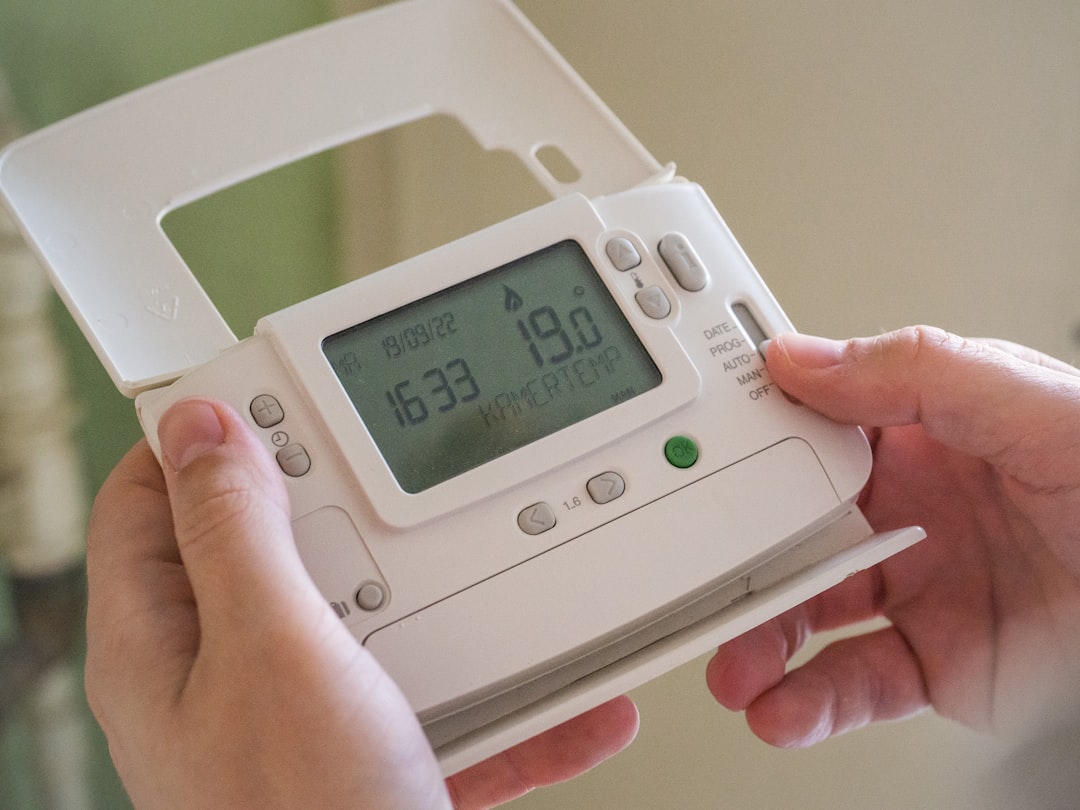
Big windows look great — but they can trick your thermostat and ruin comfort
If you have floor-to-ceiling windows, you love the view. But you may also be battling uneven temperatures, high bills, or an HVAC system that never seems to get the house right. That’s because large expanses of glass create their own microclimates: strong solar gains, radiant heat loss, downdrafts and vertical temperature stratification that can send false signals to a thermostat and make vents fight each other instead of working together.
The problem in one line: windows create local conditions that mislead temperature sensors
Modern glass and glazing technologies have evolved quickly through 2024–2026 — low-e coatings, vacuum glazing, dynamic tints and insulated frames — but the physics are unchanged: glass changes how heat moves by radiation, conduction and convective currents. When a thermostat senses the wrong conditions (too warm or too cold because of nearby glass), the HVAC system cycles inappropriately, increasing runtime, reducing comfort, and raising energy use.
How floor-to-ceiling windows form microclimates
- Radiant asymmetry: Windows exchange energy by radiation with the sky and sun more than opaque walls. On sunny afternoons a sensor near a window reads warmer than the room average; at night the same sensor can read colder due to radiative cooling to the night sky.
- Solar gain spikes: Direct sun can create localized hot spots. The thermostat may shut off heating or cooling because the sun warmed the sensor, while the rest of the room remains at a different temperature.
- Downdrafts and cold glass surfaces: On cold days, glass surfaces are colder than the room air. Cold air pools near the floor next to the window and then sinks across the room, creating vertical temperature stratification—cool at ankle level, warmer near the ceiling.
- Stack effect amplification: Tall glazing increases the vertical column over which warm air stratifies, making upper levels warmer faster and lower levels harder to keep comfortable.
- Local humidity and condensation: Glass can cause surface condensation and localized humidity shifts that affect thermal comfort and perceived temperature.
Why standard thermostat placement rules fail with floor-to-ceiling glass
Traditional guideline: mount thermostats on an interior wall about 48 inches (1.2 m) above the finished floor in a central location, away from direct sun, drafts and heat sources. That rule assumes relatively uniform room conditions and opaque exterior walls. Floor-to-ceiling glass breaks that assumption.
If the standard location is on the same wall as the window, or within the same plane of radiant influence, the sensor will report biased temperatures. You’ll get cycles dominated by the window microclimate instead of the occupant’s living zone.
Common false-read scenarios
- Thermostat in sun: system short-cycles because the sensor is warmed by solar radiation.
- Thermostat near cold glass: system runs long because sensor senses the cold downdraft.
- Ceiling warping: warm upper air triggers cooling while occupants feel chilled near the floor.
Practical thermostat placement strategies for homes with floor-to-ceiling windows
Here’s how to avoid false readings and tame those microclimates. These are field-tested approaches used in 2025–2026 retrofits and new builds.
1. Choose an interior wall away from the glazing plane
Mount the thermostat on an interior partition or a hallway wall that is not directly exposed to the windows’ radiant field. Aim for at least 6–8 feet (2–2.5 m) away from the continuous glazing plane when possible. That distance reduces radiant bias and limits influence from local downdrafts.
2. Height matters — but adapt it to the room
Standard height is 48 inches. With tall rooms and floor-to-ceiling glass, place the sensor so it represents the occupied zone rather than the ceiling or floor extremes. For living rooms with seating, position between 42–54 inches (1.05–1.35 m) above the floor — or use multiple sensors at sitting and standing heights.
3. Use remote or wireless multi-sensor thermostats
By 2026 the most reliable approach is multi-sensor control. Smart thermostats from major manufacturers now support networks of room sensors. Place 2–4 wireless temperature sensors across the zone — one near the glazing, one near the center, one near the occupied seating area — and configure the thermostat to average or prioritize occupied sensors during runtime.
4. Avoid direct sun and drafts; consider shading the sensor
Don’t install a thermostat where blinds, drapes or direct sun will hit it. If relocation is difficult, shield the sensor with a small louvered cover (not insulation) to block radiative strikes while allowing airflow.
5. Integrate occupancy and predictive control
Use motion or occupancy sensors and predictive algorithms. Modern controllers combine occupancy, external weather forecasts and solar forecasts to avoid overreacting to temporary window-driven spikes and dips — a common upgrade trend in 2025–2026 residential HVAC systems.
Vent placement and register strategy: how to fight downdrafts and stratification
Thermostat placement is only half the equation. Where you place supply and return vents determines how the system mixes air and offsets the glass-driven microclimate.
Supply registers near windows — but sized and directed correctly
- Under-window supply: Placing supplies under windows is a classic and effective way to counter cold downdrafts. Warm air rises from under the window, creating a thermal curtain that reduces cold air penetration into the room.
- High-performance diffusers: Use directional diffusers that project air across the glass to intercept downdrafts. In cooling mode, you may prefer ceiling diffusers that promote mixing and avoid short-circuiting to returns.
- CFM tuning: Oversupplying one wall can create pressure imbalance. Work with a contractor to balance cubic feet per minute (CFM) — typically, deliver slightly higher flow to window walls in cold climates and more mixing flow in cooling seasons.
Return location: central and low works best
Locate returns to capture room-mixed air, not the microclimate near the window. Central low returns or several distributed returns reduce stratification. Avoid returns mounted next to the window where they will suck in cold downdraft air and bias the system.
Consider displacement ventilation in high-ceiling rooms
In rooms with very tall glazing, low-velocity displacement ventilation (supply at floor level with return at ceiling) can be efficient because it exploits natural buoyancy: cool supply air spreads at floor level and warm contaminants rise to high returns. This strategy reduces mixing and can improve occupant comfort at the seated level.
Use zoning and motorized dampers for dynamic control
Install motorized dampers or dedicated zones for rooms with large glazing runs. Zoning lets the system modulate supply to the room independently, adjusting to solar gain or night cooling. In 2025–2026, more homes used smart zone controllers that respond to window sensors or solar forecasts to proactively rebalance flows.
Commissioning checklist: test and verify to avoid guesswork
Always validate your changes. A simple commissioning procedure prevents wasted effort.
- Baseline: log temperatures at multiple locations for a sunny and a cloudy day (use data-logging sensors or a smart thermostat’s history).
- Thermal imaging: use an infrared camera to spot cold glass, drafts and insulation defects.
- Airflow measurement: measure register CFM and adjust balancing dampers.
- Sensors test: place temporary sensors near the windows and in the occupied zone to see differences; aim for less than 1–2°F variance under steady-state conditions.
- Runtime verification: monitor system runtime before and after changes. Expect reductions in unnecessary cycles when you eliminate false reads.
Field note: In a 2025 retrofit, our team moved a thermostat 8 feet off the window wall and added two remote sensors. Runtime dropped and occupants reported even warmth across the seating area within a week.
Advanced strategies and 2026 trends to watch
Use these higher-level solutions for long-term performance and future-proofing.
1. Integrate window performance data into HVAC controls
Starting in late 2024 and accelerated through 2025, several controls platforms began accepting inputs from building envelope sensors: window transmittance, blind position, and measured solar gain. By 2026 it's common for high-end systems to reduce heating when dynamic glazing limits heat loss, or to pre-cool a room before a planned sunlit event.
2. Radiant panels or underfloor heating paired with glazing
Because glass affects radiant heat exchange, pairing HVAC with radiant floor heating or low-temperature radiant panels can neutralize asymmetry. Radiant systems provide uniform surface temperatures that reduce stratification complaints, particularly in spaces with very large windows.
3. AI-driven microclimate control
AI controllers trained on occupancy, weather forecasts and historical solar patterns can anticipate a sun-driven spike or night cooling dip and adjust setpoints, damper positions, and supply temperatures. Expect these tools to become more mainstream in 2026 for high-performance homes; read more on edge AI and low-latency control approaches.
4. Dynamic shading and motorized blinds connected to HVAC
Shading systems that respond to sun angle and interior temperature reduce the need for aggressive HVAC responses. When integrated with thermostats, dynamic shades reduce temperature swings and lower the chance of false thermostat readings.
Simple tests homeowners can run today
- Place a stick-on temperature sensor or a second smart sensor at the seating height in the room and compare readings to your thermostat for a sunny hour. If the difference exceeds 2°F regularly, placement or sensors need work.
- On a cold night, use an infrared thermometer to read the glass surface temperature. If glass is 10–20°F colder than wall surfaces, expect downdrafts and consider under-window supply or improved glazing.
- Temporarily close shades or blinds and note changes in runtime and comfort. If comfort improves markedly, consider shading or dynamic tinting as part of the HVAC strategy.
Installer checklist for projects with floor-to-ceiling windows
- Perform thermal imaging and register airflow measurement during the initial survey.
- Plan thermostat location on an interior wall, 6–8 ft from glazing if possible; otherwise plan multiple remote sensors.
- Design supply and return layout to offset the glazing plane — under-window supply plus central returns is usually best.
- Specify zoning or smart dampers where glazing creates distinct microclimates.
- Commission with data logging: confirm temperature variance, CFM, and system runtime reductions.
Case study: mid-2025 townhouse retrofit
Project snapshot: 3-bedroom townhouse with 10-foot floor-to-ceiling windows on the living room exterior wall. Symptoms: short-cycling, cold floors in winter, living area thermostat showed warmer temps in the afternoon but occupants felt chilly.
Actions taken:
- Moved thermostat from the window wall to an interior hallway wall 7 feet from glazing.
- Installed three wireless sensors (window edge, center seating, hallway) and configured the thermostat to use occupied sensor averaging.
- Added a low-velocity under-window supply register with a directional diffuser and balanced the return to central low-level location.
- Deployed motorized shades tied to the thermostat to reduce afternoon solar loading during cooling season.
Results over the first month: occupant-reported comfort improved significantly; temperature variance across the living area dropped from ~4.5°F to ~1.1°F; heating runtime fell by approximately 12% in measured hours. The system also reduced short-cycling events, extending equipment life.
Final actionable takeaways
- Don’t mount thermostats on or near the glazing plane. Prefer interior walls or use multiple remote sensors.
- Counter cold glass with under-window supply registers or displacement ventilation.
- Use smart, occupancy-aware multi-sensor control. By 2026 these are affordable and effective.
- Commission and verify. Measure temperatures and airflow before and after changes; balance CFM to the glazing wall.
- Consider shading, dynamic glazing, or radiant systems as complementary measures to reduce microclimate effects.
Where to go next
If you have floor-to-ceiling windows, the right thermostat and vent placement — plus a bit of commissioning — can make your home both more comfortable and more efficient. Small changes in sensor location and register balancing deliver outsized improvements in comfort and HVAC performance.
Call to action: Want a tailored plan for your home? Schedule a professional microclimate survey with a certified HVAC technician who uses sensor networks and robust data pipelines and thermal imaging. We’ll map the glazing influence, recommend thermostat relocation or multi-sensor setups, and balance your vents so your big windows give you the view — without the comfort trade-offs.
Related Reading
- Home-based asthma care and indoor air sensing (2026) — ties humidity and condensation to occupant health.
- Edge datastore strategies for sensor data — options for storing and querying your HVAC logs.
- Edge AI reliability for distributed sensor networks — design patterns to keep your sensor network robust.
- Battery lifecycle and recycling considerations — for planning replacement of wireless sensors.
- AI Quality Gateways: A Template for Business Buyers to Vet AI Outputs
- The Fashion Remix: How the Adidas ‘Chinese Jacket’ Fueled a Global Meme
- Case Study: Integrating Homeopathy into a Community Night Market Event (2026)
- Guide to Purchasing Travel Tech During an AI Hardware Crunch
- How to Consolidate Loyalty Programs and Not Lose Points (Frasers Case Study)