Scam vs. Science: The Truth About Plug-In Devices That Promise to Cut Your Bills
Hook: If you’ve ever been tempted by a cheap plug-in gadget promising to cut your heating or electricity bills by 20–50% overnight, this is for you. Those flashy claims prey on real pain points — high energy bills, confusing technology choices, and the desire for quick fixes. But quick fixes that sound too good to be true usually are.
Why this matters now (2026)
Through late 2025 and into 2026 we've seen two important trends: regulators and independent reviewers are exposing more fraudulent energy gadgets, while legitimate efficiency tools and electrification incentives and rebates have become more accessible for homeowners. That combination means consumers need clear guidance to separate scams from worthwhile investments in home heating and energy efficiency.
How the most common plug-in “energy savers” claim to work — and why they usually don't
Manufacturers of suspicious plug-in devices use a few repeat themes. Understand them, and the red flags become obvious.
1) “Power factor correction” devices
How they're marketed: These gadgets claim to correct your home's power factor so the utility charges you less.
Science reality: Residential customers are billed on real energy use (kWh), not apparent power or power factor. Power factor penalties apply mainly to industrial/commercial accounts with large inductive loads. So for typical homes, correcting power factor does not reduce the billed kilowatt-hours. In short: a plug-in power factor corrector is unlikely to lower your residential bill.
2) “Voltage stabilizers” and “surge harmonizers”
How they're marketed: These promise to stabilise voltage, reduce spikes, and improve appliance efficiency.
Science reality: Household voltage variations are not the main driver of everyday electricity consumption. Modern appliances already include electronics to handle normal voltage ranges. Any small reductions in losses are negligible compared to the energy used by heating systems, water heaters, and compressors.
3) “Magnetic/quantum/energetic field” devices
How they're marketed: Buzzwords — “magnetic field alignment,” “energy harmonics,” “vortex stabilization.” No technical data, lots of anecdotal testimonials.
Science reality: These claims are pseudoscientific. No credible lab data supports energy savings from magnets or “quantum” stickers attached to outlets.
4) Smart plugs marketed as energy savers
How they're marketed: Plug into the wall, save money with an app.
Science reality: A legitimate smart plug can reduce standby or phantom loads by turning devices fully off on a schedule or when not in use. But a smart plug is not a magic energy reducer — it only saves energy when it actually cuts power to a load that would otherwise be consuming energy. Claims of huge percentage reductions without context are misleading.
Real-world investigative signals: how fraudsters sell these products
- Unrealistic claims: Promises of 20–50% savings without independent testing or clear conditions.
- Vague science: Technical-sounding but empty explanations — “phase alignment,” “reactive energy optimization” — with no datasheet.
- No third‑party lab reports: Reputable energy products provide independent test reports from Intertek, UL, ETL, or CE marks and clear verification.
- Direct-only sales models: Heavy reliance on social media ads, multi-level marketing, or platforms with minimal buyer protection.
- Fake reviews and testimonials: Overly emotional or repetitive success stories; reviewers without verifiable profiles.
Consumer testing in recent years — including independent tech reviewers like ZDNET — has repeatedly shown that only a tiny fraction of plug-in energy gadgets produce measurable benefits for typical homes. Most are either ineffective or only helpful in rare commercial scenarios.
How to spot a scam — a quick consumer alert checklist
Before buying, run a rapid verification using this checklist.
- Ask for proof: Demand independent lab test reports that match your electrical supply (single-phase residential). If the seller refuses or sends unverifiable PDFs, walk away.
- Check certifications: Look for UL, ETL, or CE marks and confirm them on the certifier’s database.
- Search for regulatory actions: Check the FTC, your state attorney general, and the Better Business Bureau for complaints.
- Look at the math: If they can’t explain in plain terms how kilowatt-hours (kWh) will be reduced, it’s suspicious.
- Measure before you buy: Use a Kill-A-Watt or a whole-house monitor (Sense, Emporia Vue, or similar) to track baseline usage for 30 days. Don't rely on a seller’s short before/after videos.
- Beware of one-size-fits-all promises: Houses differ. Energy savings depend on heating fuel, insulation, controls, and occupant behavior.
How to test a device yourself safely and reliably
If you already have a device or are tempted to try one, perform a controlled test:
- Establish a baseline: Monitor whole-home energy use for 30 days using a smart meter or a home energy monitor (Sense, Emporia Vue, or similar). Log daily kWh and heating degree days (HDD).
- Install the device: Put the device exactly where the seller instructs and run it for the same length of time (30+ days) over comparable weather conditions. Use weather-normalized comparisons.
- Control variables: Keep thermostat settings, occupancy, and other major energy uses stable. If that's impossible, adjust results for HDD or use regression analysis.
- Verify with submetering: For plug-in claims, use a Kill-A-Watt on the targeted appliance to confirm its consumption didn’t change. Many plug-in devices reduce nothing at the appliance level.
- Be skeptical of small, short-term gains: If savings are within the variance of normal consumption (typically ±5–10%), they are not meaningful.
Legitimate technologies and investments that actually cut heating and energy bills
Stop chasing magic boxes. Redirect that budget to proven measures that make measurable differences:
1) Controls and behavior: Smart thermostats and scheduling
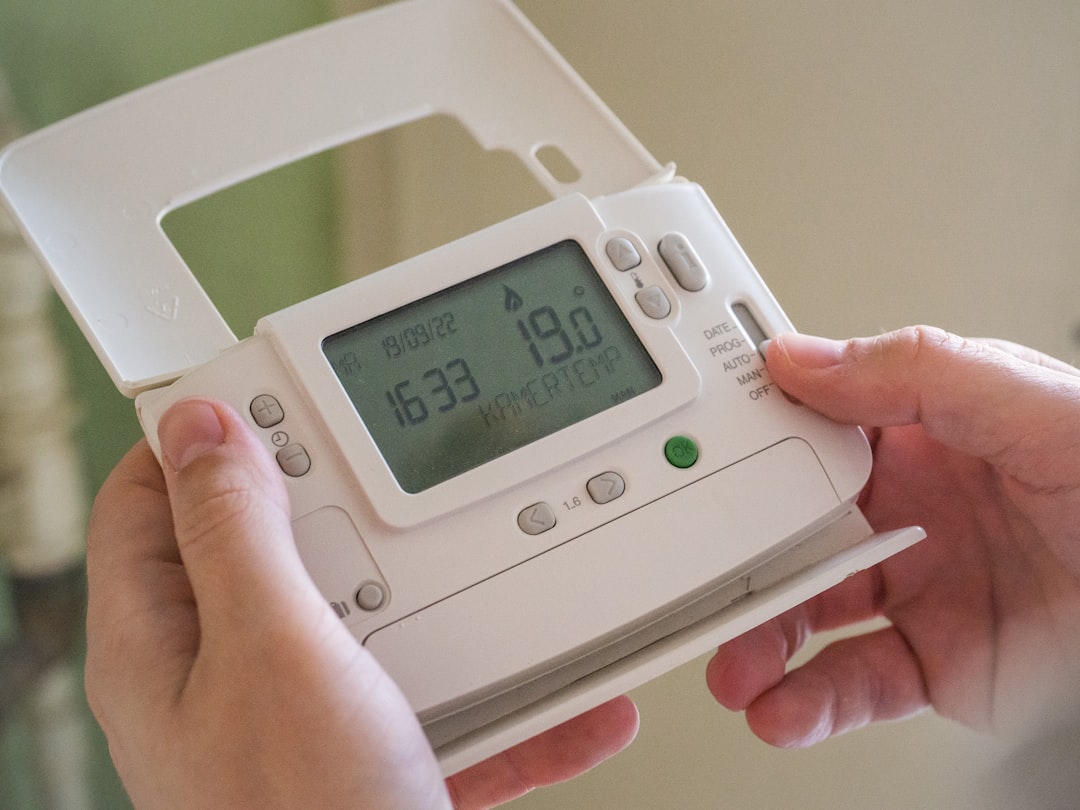
Why it works: Smart thermostats (Nest, Ecobee, Honeywell) manage setpoints, use occupancy and learning algorithms, and integrate with utility demand programs. Independent studies show they typically save 7–12% on heating and 10–15% on cooling when properly configured.
Actionable tip: Use a schedule based on your occupancy and leverage adaptive recovery features. Pair with zoning or smart vents only after consulting a pro; improper zoning can harm equipment.
2) Upgrade to a heat pump (or high-efficiency furnace/boiler)
Why it works: Modern air-source and cold-climate heat pumps deliver strong seasonal energy savings over resistance heating and often outperform older fossil-fuel systems on cost, especially where electricity is decarbonizing. In many U.S. and European markets, incentives and rebates through 2026 still favour heat pump installations.
Actionable tip: Get a Manual J load calculation and a Manual S equipment selection. Insist on a certified installer (NATE-certified in the U.S.) and check for manufacturer and utility rebates.
3) Insulation and air sealing
Why it works: Addressing the building envelope is often the single most cost-effective step to reduce heating demand. Air sealing, attic insulation, and eliminating thermal bridges can deliver double-digit reductions in heating load.
Actionable tip: Start with a blower-door test and infrared scan. Prioritize attic, rim-joist, and duct-sealing work before upgrading equipment.
4) Duct upgrades and variable-speed blowers
Why it works: Leaky or poorly sized ducts and single-speed blowers waste energy and reduce comfort. Variable-speed ECM blowers and proper duct sealing improve system efficiency and comfort.
5) Water heating and heat pump water heaters
Why it works: Heat pump water heaters can cut water-heating energy use by 50–70% versus electric resistance models. They pay back quickly in many climates when incentives are available.
6) Whole-house energy monitoring and analytics
Why it works: Tools that give you visibility — whole-house monitors, smart meters, utility portal analytics — help identify true savings opportunities and verify retrofit performance.
Smart plug alternative: practical devices that do work
If you like the convenience of plug-and-play, choose proven options:
- Smart plugs and smart power strips — Use them to eliminate phantom loads (printers, home entertainment systems, chargers) on schedules. Savings are real but modest.
- Smart thermostats — High ROI for heating systems, especially when used with proper HVAC controls.
- Plug-in energy monitors (Kill-A-Watt) — Use them to measure appliance consumption before buying anything. For testing and reviewer-style rigs, see our notes on reviewer gear.
- Whole-house monitors — For larger investments, use a whole-home sensor to validate savings from big-ticket measures like heat pumps or insulation.
Buying guide: how to choose the right upgrade for your home
Follow a staged, evidence-based approach — that reduces risk and avoids falling for a scam.
- Measure first: Monitor for 30–90 days to understand where energy is going (heating, water, ventilation, plug loads).
- Prioritize low-cost, high-value measures: Air sealing, attic insulation, thermostat controls, and duct sealing.
- Get a professional audit for major upgrades: For heat pumps or furnace/boiler replacements, require Manual J and Manual S, and multiple written bids.
- Check incentives: Search DSIRE or your utility portal for rebates and tax credits. Incentives in 2026 still favour electrification and efficient HVAC equipment in many regions.
- Hire vetted installers: Ask for NATE, BPI, or local certifications. Verify past work and get references.
- Require a documented performance expectation: Ask installers for modeled energy use reductions and an explanation of how they will verify results after installation.
Consumer protections and what to do if you bought one of these devices
If you already spent money on a suspicious device, take these steps:
- Try to test for real savings: Use the monitoring steps above. If there's no measurable change after a controlled test, you have reason for a refund claim.
- Contact the seller: Ask for a refund in writing and cite the lack of independent evidence.
- Escalate: If the seller refuses, open a credit-card dispute and consider local mediation approaches demonstrated in recent experiments like pop-up micro-mediation hubs. Also open complaints with the FTC and your state attorney general. Document everything — receipts, screenshots, lab claims, and test data.
- Share your findings: Posting a detailed review (with measurements) on consumer forums and review sites helps warn others and builds evidence for regulators.
Case studies: experience over hype
Case A — The plug-in “energy harmoniser” (real outcome)
A homeowner bought a low-cost plug-in device after seeing social media ads claiming 30% savings. After a 60‑day baseline and 60‑day test with whole-house monitoring, measured monthly usage was unchanged (±3%, within normal variation). The homeowner disputed the charge, supplied the test data to their card issuer, and received a partial refund.
Case B — Strategic upgrade drives real savings
Another homeowner replaced a 20-year-old gas furnace and leaky ducts with a cold-climate heat pump, duct sealing, and a smart thermostat. With contractor modeling, incentives, and post-install monitoring, they saw a 35% decrease in winter energy costs. The investment had a reasonable payback when rebates and projected fuel-cost changes were included.
Signals regulators and reviewers have focused on (2024–2026)
Independent publications and testing labs (including ZDNET and consumer test groups) have increased scrutiny of plug-in energy claims. Regulators have signalled heightened attention to deceptive energy-savings advertising. The takeaway: vendors making sweeping claims without independent verification are more likely to attract enforcement and refunds are more likely to be awarded to consumers who documented their case. For background on trust and automation in modern review ecosystems see discussions of trust and automation.
Final, practical takeaways — what to do next
- If you’re tempted by a plug-in device: Stop. Measure first. Demand independent lab tests and, if possible, a refund guarantee.
- Invest instead in proven measures: Start with air sealing, insulation, and a smart thermostat. For major heating changes, prioritize proper load calculations and certified installers and efficient permitting.
- Use monitoring to verify performance: Whole-home monitors, Kill-A-Watt meters, and utility meter reads are your best tools to validate claims.
- Report scams: If you suspect fraud, report it to your utility, the FTC, and your state consumer protection office. Documentation helps enforce change.
Closing thought
There are no shortcuts to sustained lower heating bills. In 2026, the landscape is clearer: the real gains come from evidence-based upgrades, quality installation, and smarter controls — not from unproven plug-in gadgets. Spend your budget where the data, independent testing, and certified professionals point.
Call to action: Want a simple starting point? Download our free 30‑day monitoring checklist and measured-savings template, or request a vetted installer list for heat pump and furnace upgrades in your area. Protect your wallet from scams — choose investments that deliver verifiable savings.
Related Reading
- Operational Playbook 2026: Streamlining permits, inspections and energy efficiency for small trade firms
- Portable Power Station Showdown: Jackery vs EcoFlow vs DELTA Pro 3
- Warm Nights: How to Choose Wearable Heating (From Hot‑Water Bottles to Heated PJs)
- The Evolution of Circadian Lighting for Homes in 2026: What to Buy, What to Integrate, and What's Next
- What FedRAMP‑Approved AI Means for Secure Government Travel and Contractors
- House-Hunting or Hyperfocus? When to Seek Help for Obsessive Home Search Behaviors
- Travel Tech Power Plan: Managing Multi-Week Smartwatch Batteries on the Road
- Designer Villas on a Budget: Finding Stylish French Island Rentals Under $2M
- Cozy Hijab Styling: Using Scarf Textures and Hot-Water Bottles for Winter Modesty